





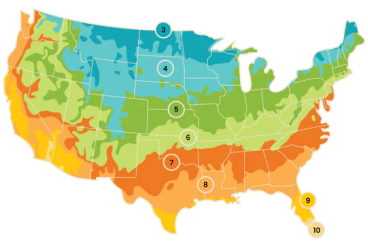
Transform your landscape into a buzzing sanctuary with the Southeast Pollinator Garden Bed. Specifically curated for the unique climate of the Southeastern U.S., this collection features a powerhouse lineup of native perennials designed to provide high-impact beauty and critical ecological support.
From the first blooms of spring to the final nectar of autumn, this garden bed ensures your outdoor space remains a vibrant haven for butterflies, hummingbirds, and native bees.
Why Choose the Southeast Pollinator Garden Bed?
- Continuous Bloom Cycle: Enjoy a seamless transition of color and nectar. This set starts with the early spring spikes of Pink Beardtongue and concludes with the late-season grand finale of Sweet Goldenrod.
- Layered Vertical Interest: This collection solves the leggy look of taller species. While Blazing Star and Sweet Goldenrod reach for the sun, Frogfruit acts as a living mulch, carpeting the ground with year-round greenery and delicate blooms.
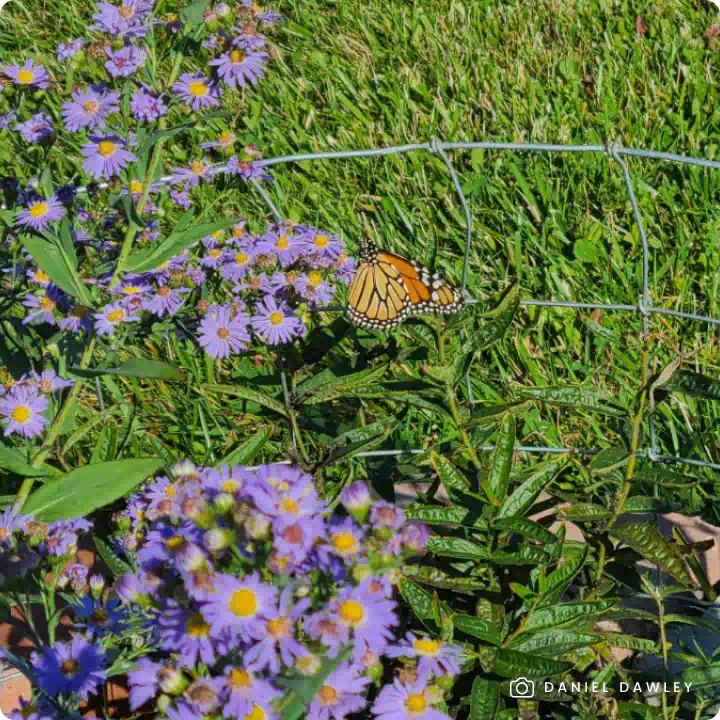
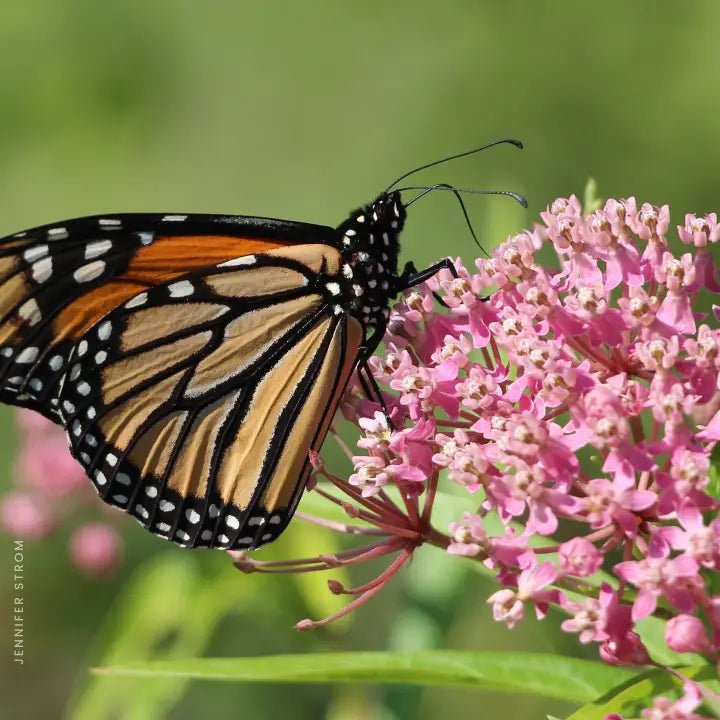
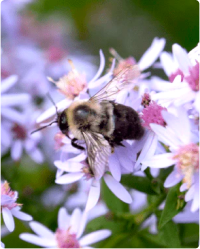
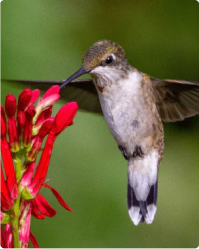
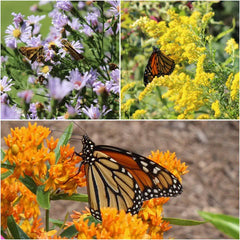
- Diverse Pollinator Support: Cater to a wide variety of garden guests. Long-tongued bees and hummingbirds are drawn to the tubular Beardtongue, while butterflies swarm the airy clusters of Blue Mistflower and the dramatic wands of Blazing Star.
- Pollinator-Safe: All plants are grown non-GMO and are 100% neonicotinoid-free, ensuring a safe haven for the wildlife they attract.
Meet the Plants
- Pink Beardtongue (Penstemon australis): Positioned at the front of your garden bed, this species provides the earliest wow factor with its vibrant pink tubular blooms during the spring and early summer.
- Frogfruit (Phyla nodiflora): A versatile groundcover that acts as a living mulch, blooming from spring through fall and nearly all year in some areas; it effectively fills gaps at the base of taller plants.
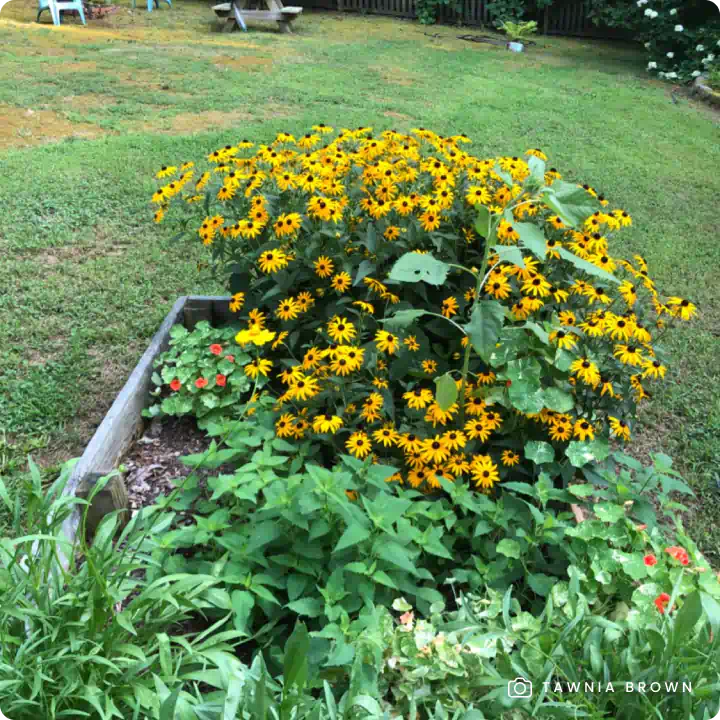
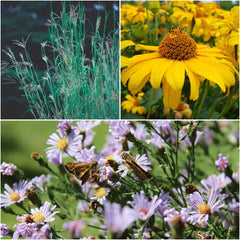
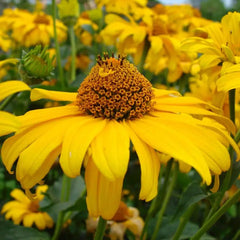
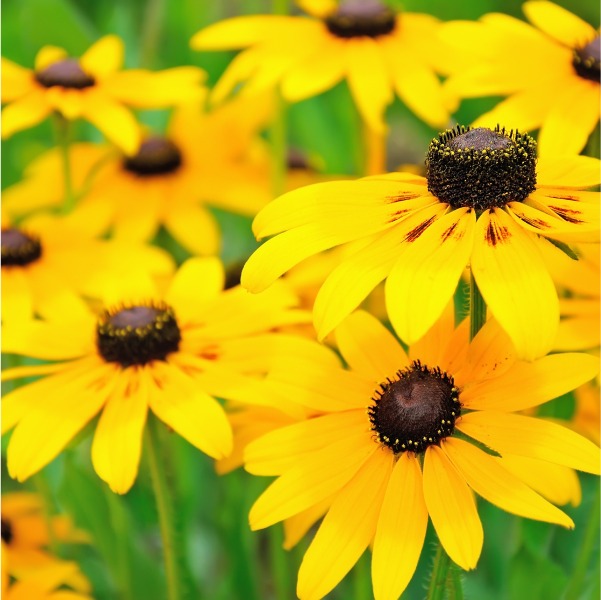
- Black-Eyed Susan (Rudbeckia hirta): Serving as the mid-height anchor, this summer bloomer bridges the seasonal gap between spring and fall with its iconic golden petals.
- Dense Blazing Star (Liatris spicata): Best for the back or middle of the bed, it adds dramatic vertical purple wands that are absolute butterfly magnets during mid-to-late summer.
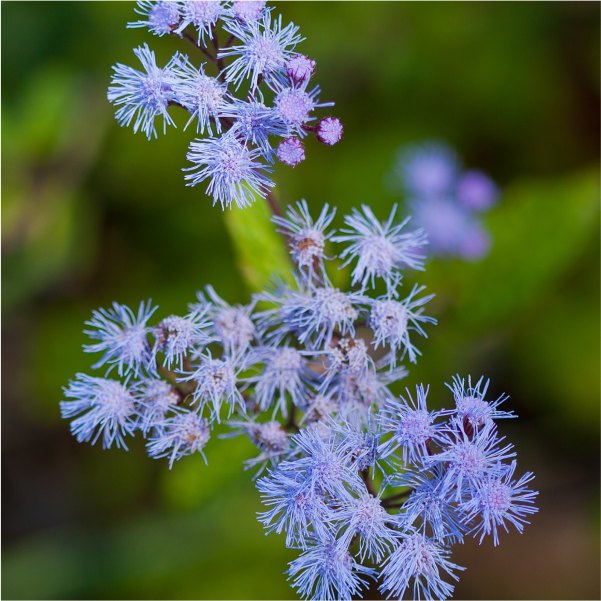
- Blue Mistflower (Conoclinium coelestinum): Occupying the middle layer, this plant creates soft, airy blue clusters in late summer and fall, providing critical nectar as the heat of summer fades.
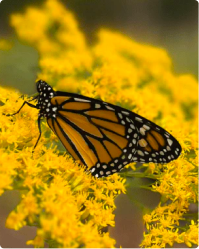
- Sweet Goldenrod (Solidago odora): The late-season grand finale for the back of your garden, featuring striking golden spikes and unique anise-scented foliage from late summer through fall.
Planting Tips
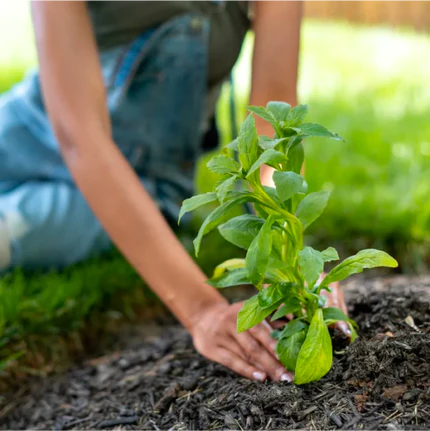
- Location: For the best bloom production and pollinator activity, plant in a location that receives full sun to partial shade.
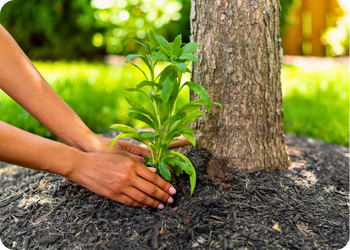
- Watering: Water regularly during the first growing season to help the root systems establish. Once mature, these native species are generally drought-tolerant and resilient.
- Maintenance: Minimal care is required. Avoid deadheading in the fall; allowing plants to go to seed provides a valuable food source for birds.
- Winter Prep: Leave the stems standing through winter to offer overwintering sites for beneficial insects. Cut back stems in late spring after pollinators have emerged.
For more information on planting, view our How to Plant Your Native Plants guide and other planting tips in the Garden for Wildlife Learning Center.
 Grows to:
  Spread:
  Blooms:
  Light Requirements:
  Soil Moisture:
  Soil Description:
  Attracts:



 Verified Buyer